Summary
The Seed Saga of Association Kokopelli, and Annadana Seed Centers, in India and Nepal
17 Published Studies, from India, to be Retracted – from 2022 to 2002
20 Studies, from India, to be Corrected – from 2024 to 2008
Foreword
Caveat. As I am not an academic and as I have not published any “paper”, published in famous international journals – because I can’t… as not being an academic with diplomas! – I write as a poet, a historian, a linguist, a photograph, a journalist, a detective, an explorer, a globe-trotter, a Troubadour… would write: with intuitions, emotions, sensitivities, wits, humor, colors, allegories, synergies… and enthusiasm! And of course, I write while being totally opened to the flow of instructions, and imaginations, emanating from the Muses and other Dancing Dakini of the Diamond Sky!
A propos, may I precise that PhD means, literally, “philosophiae doctor” – meaning “Teacher of the Love of Sophia/Wisdom”.
Thus, may I invite all those who are not disposed, or pre-disposed, to read and digest my existential stories, to jump to a safer place – the fourth and fifth sections of this essay? Namely, my cold, precise, and concise, analysis of why 37 published studies, made in India, should be retracted or corrected. In all simplicity.
Namaste to all Ocimum researchers of India!
In the following 37 studies from India, from 2024 to 2002, the Ethiopian Besobila, Ocimum bisabolenum, has been misidentified as Ocimum tenuiflorum, Ocimum gratissimum, Ocimum americanum, Ocimum kilimandsharicum and Ocimum basilicum. That suggests, if I may, a profound botanical chaos surrounding the different species of Basil in India.
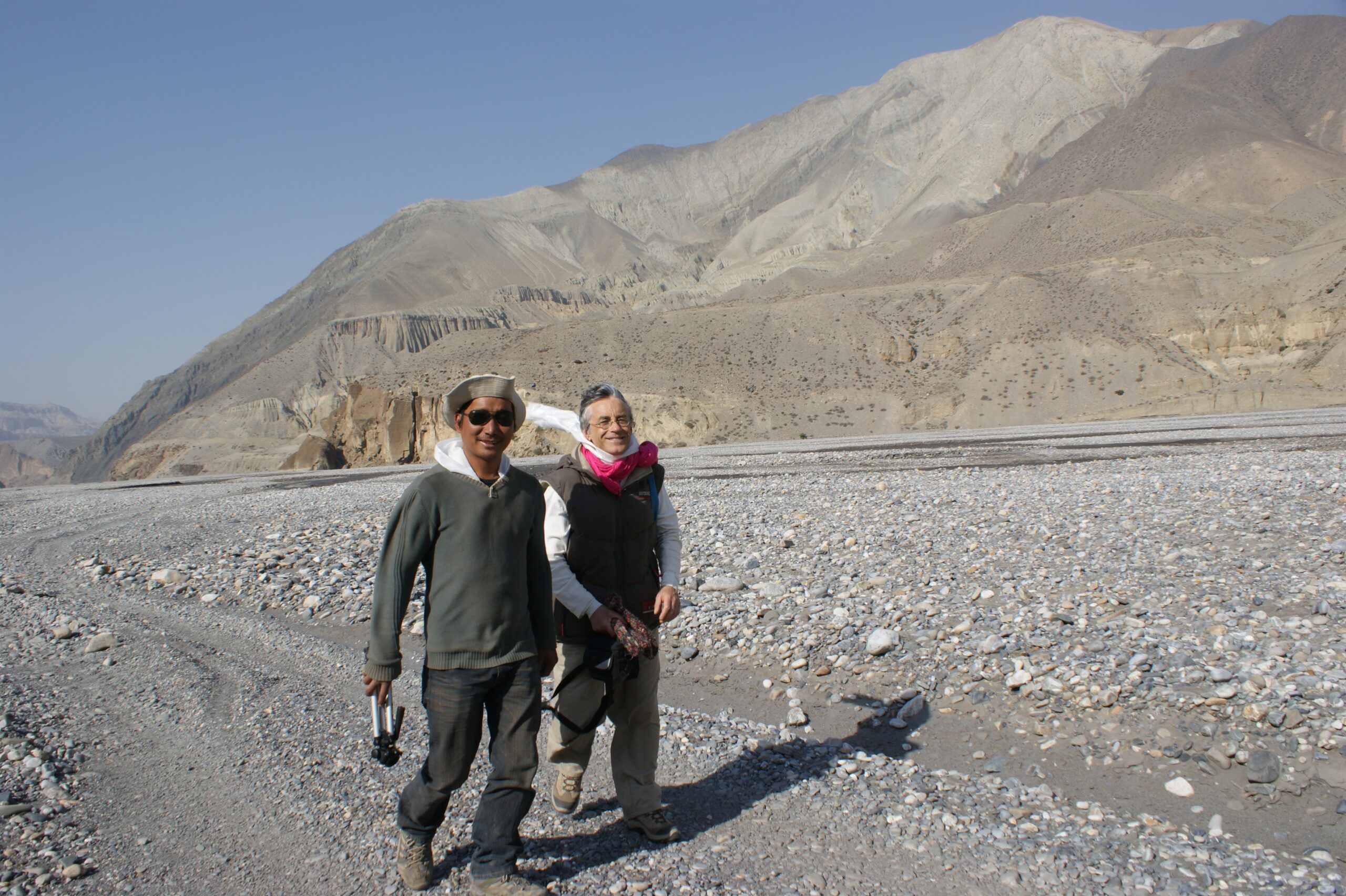
Do not take me wrong! I love India and Nepal – as well as Bhutan! My first trips, in the Himalayas, were in 1978 and 1980. I met the Dalaï Lama, then, in Dharamsala – for what is worth…! – while I was learning Tibetan language. I had the privilege to trek in Mustang when Pokhara was still a big village on its magnificent Phewa Lake – the site of my memorable first fusion with Psilocybe mushrooms! At this time, I was one of the first Westerners to enter Ladakh, and Zanskar, when they opened the doors to their wonderful desert and mountain landscapes. At this time, there was nothing western to eat, there, during a trekking – apart the rice and peanut butter you had brought in your back-pack… which did not last long – but there was always plenty of Tsampa, yak butter tea and yoghourts to exchange on the way! A good life, indeed!
When, in 1994, I introduced a huge collection of organic seeds of grain Amaranths, in France, and Europe, in the organic seed market, I was very surprised to discover that the NBPGR in Shimla, Himachal Pradesh – where my first daughter was conceived in 1982 – cared for the most extensive collection in the world of “Ramdana” and “Ramgira” – with so many other names in Sanskrit. Why? Because the species of grain Amaranths have been in Himalayas, and southern India, for thousands of years – under the status of “invasive” food plants coming from south and central America! In 1994, I introduced one of the cultivars bred by the NBPGR in Shimla, “Annapurna” – Amaranthus hypochondriacus – and Kokopelli is still selling it more than 30 years later. Link. That was a botanical Wind of Destiny!
Today, I can validate my arguments, concerning these erroneous studies, because I introduced, myself, Ocimum bisabolenum in the organic seed-market, in France and Europe, in 1994 – under a wrong specific denomination and, then, under Ocimum sp. – and we grew and sold it, since then, with Terre de Semences and Association Kokopelli. Link. And because, also, I discovered its true geographic origin and traditional uses, in Ethiopia, as well as its species status – during the summer 2022, in Spain. That discovery was made thanks to growing some GRIN/USDA accessions – of which PI 652059 (OCI 155/95 IPK Gatersleben), from Maldives, in front of Ethiopia, which was not Ocimum tenuiflorum but Ocimum bisabolenum. Link
May I invite the readers to consult my 9 monographs and reports, in English, on the subject of Ocimum species? “Summary of my Monographs, and 2025 Reports, on Basils, Tulsi and other Ocimum in English”. Link. More of my monographs are available… but they are in French or Spanish. Link.
Truth be told – as an expert in the Art of Stalking – I went through, or read totally, so many hundreds of published studies, on Ocimum species, since June 2022, that they sump up, surely, to more than one thousand. I am, indeed, a truth-seeker! Stalking comes with Tracking… and I went through many ways (fertile or sterile) to track down the truth concerning the Ethiopian Besobila. And I found it! Thank you for your attention.
In fact, I studied all the published studies concerning Ocimum americanum, Ocimum kilimandscharicum, Ocimum carnosum, Ocimum campechianum, Ocimum lamiifolium and a huge amount of studies concerning Ocimum basilicum, Ocimum tenuiflorum and Ocimum gratissimum.
I went through – as Alice in Wonderland – all the genetic studies published about Ocimum species. That is why I could assert, already in 2022, without the faintest doubt, that some geneticists researchers (giving their full attention) had declared, squarely, almost a quarter of century ago, that all the unknown ecotypes of Basil with Bisabolene (and Eugenol, Estragol and Eucalyptol as major components) were constituting a unique unknown species.
Now, I am well aware that most of the researchers, and authors, of these studies, made in India, are totally sincere in their motivations and approaches as it is stipulated, for most of the studies to be retracted, that their ecotypes of Ocimum have been identified by professional certified PhD Indian state botanists – with official vouchers, etc.
In fact, most of the studies, to be retracted, presented below, could be, as well, heavily corrected because their results, most often, are strictly not to be questioned. But their authors need to precise, very clearly, that the subject of the study was not an ecotype of Ocimum tenuiflorum or Ocimum gratissimum or Ocimum americanum or Ocimum kilimandsharicum or Ocimum basilicum – but an ecotype of Ocimum bisabolenum. In all simplicity… because «errarre humanum est!»
Thus, it is pretty obvious, with all due respects, that some Indian PhD state botanists are not competent enough to differentiate, properly, different species of Ocimum in their own country. But well, the same could be said of the US agronomists, and botanists, of the GRIN/USDA genetic ressource center, in Iowa, as per the plethoric number of their accessions which are, strictly, misidentified. See my analysis, for example, of a 2016 Polish study relying on Ocimum accessions provided by the GRIN/USDA Link – and the pathetic answer from the publisher Elsevier. Link.
At 72 years old, I am not born from the last chemtrailed-rain! Thus, I will keep up the fight until the Besobila, stemming from the highlands of Ethiopia, be recognized, officially, as a true species – “Ocimum bisabolenum. Guillet Xochi. 2022” – in accordance with the current international taxonomic nomenclature.
As to Elsevier – the group and the “science” – what is more pathetic than having waited 25 years to retract (Link) the fake and ghost study, “Safety Evaluation and Risk Assessment of the Herbicide Roundup and Its Active Ingredient, Glyphosate, for Humans”, paid to a bunch of PhD, by the Monsanto Mafia? Link. By the way, when Bayer bought Monsanto, I got a letter, from their lawyers, informing me, officially, that I was on the “Monsanto Black List”. Well, nothing new… and I am still alive! I am a warrior… I am the one who liberated the free circulation of Heirloom Open-Pollinated Seeds in Europe. I spent 10 years of struggle, with Association Kokopelli, in the French and European Courts of Injustice, against Monsanto and the whole Seed-Agro-Pharma-Mafia – and their Deep State stooges… Today, Association Kokopelli is still alive and keep on fighting for its survival.
And what about the junk climate science? Well, Nature just retracted the very famous study (written by PhD of the Potsdam University) projecting high costs of “climate change” – a Globalist Mafia Trade Mark . Link. As early as 2007, I launched a moratorium against what I named “necro-fuel” (Link), to break the spell, and, in 2009 (16 years ago!) I wrote, in French, 4 articles, in 60 pages, debunking, already, the criminal scam of “Anthropic Global Warming” – which is, more exactly, “Predatory Global Worming”! Link.
That being said, it is rather amazing, and disconcerting, that the PhD state botanists, from India, are not able to recognize their own very sacred, cultural and medicinal plants as all the aforementioned species – Ocimum tenuiflorum, Ocimum gratissimum, Ocimum americanum, Ocimum kilimandsharicum and Ocimum basilicum – have been types of “Tulsi”, for a very long time, in India and in the sub-continent.
Indeed, in India, Ocimum tenuiflorum is “Rama Tulsi” or “Krishna Tulsi”. Ocimum kilimandsharicum is “Kapura Tulsi”. Ocimum gratissimum is “Vana Tulsi”. Ocimum basilicum is “Babu Tulsi”, “Marua Tulsi”, etc. Ocimum americanum is “Kali Tulsi”.
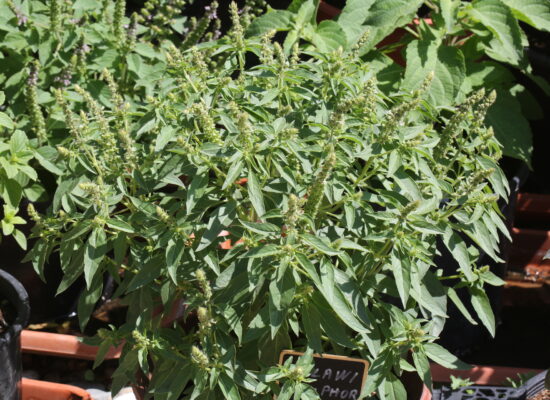
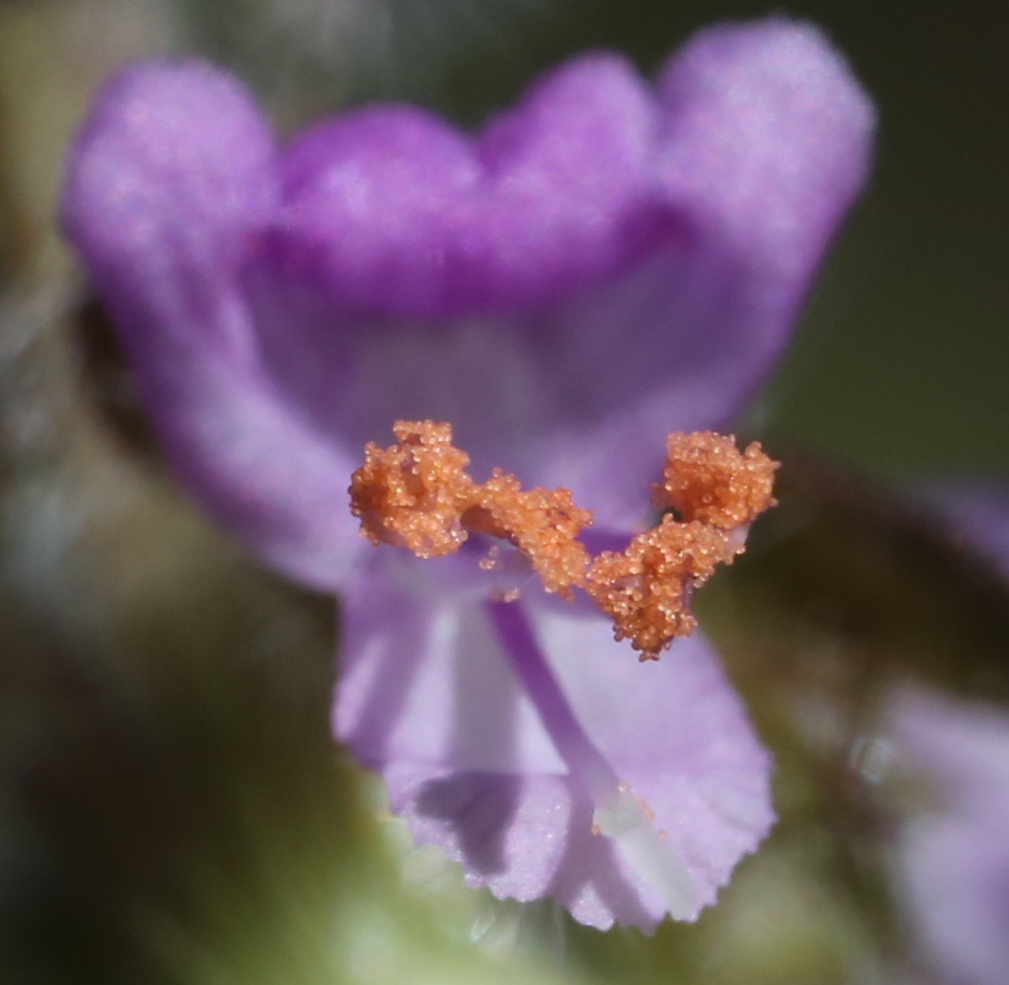
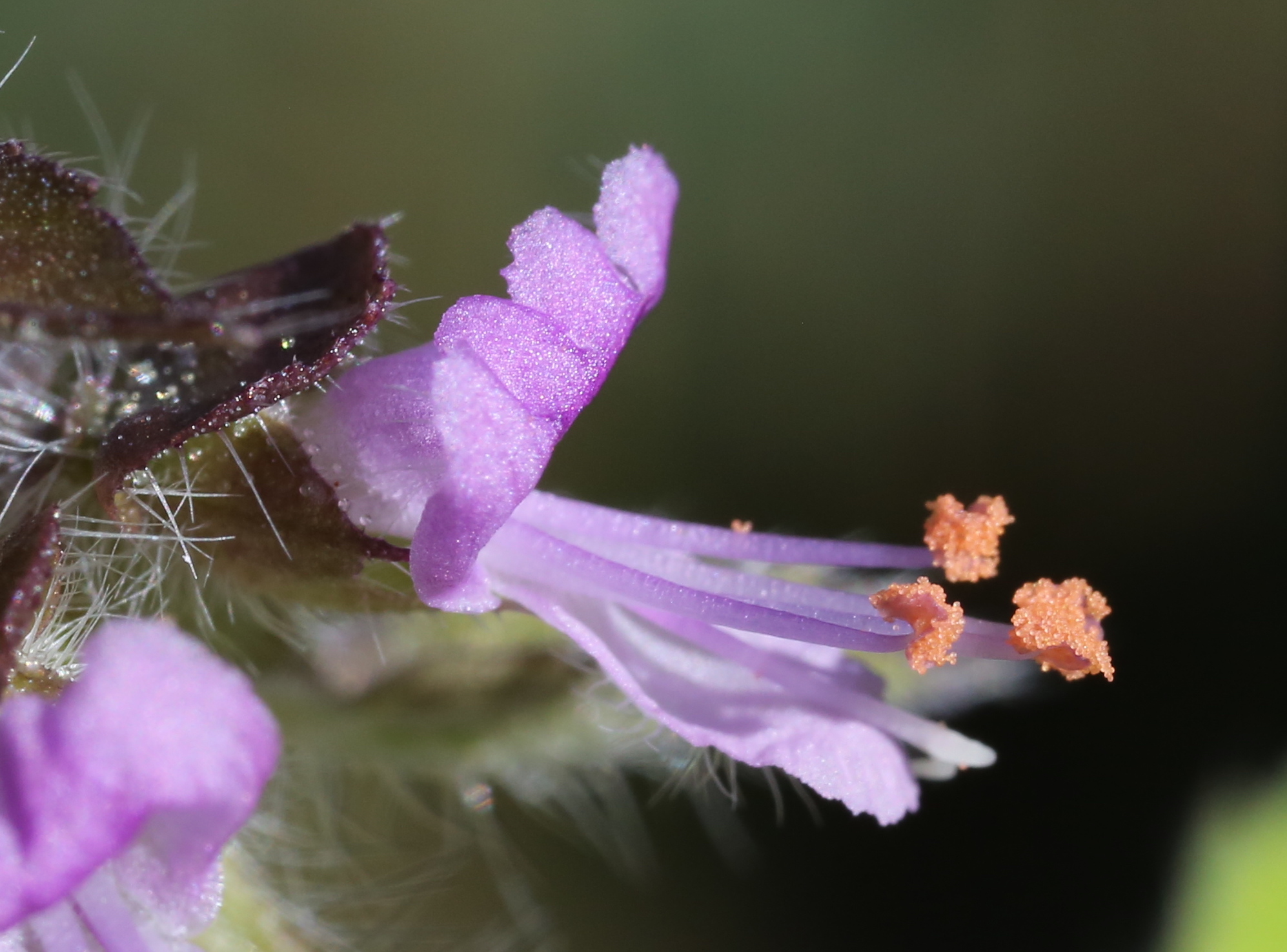
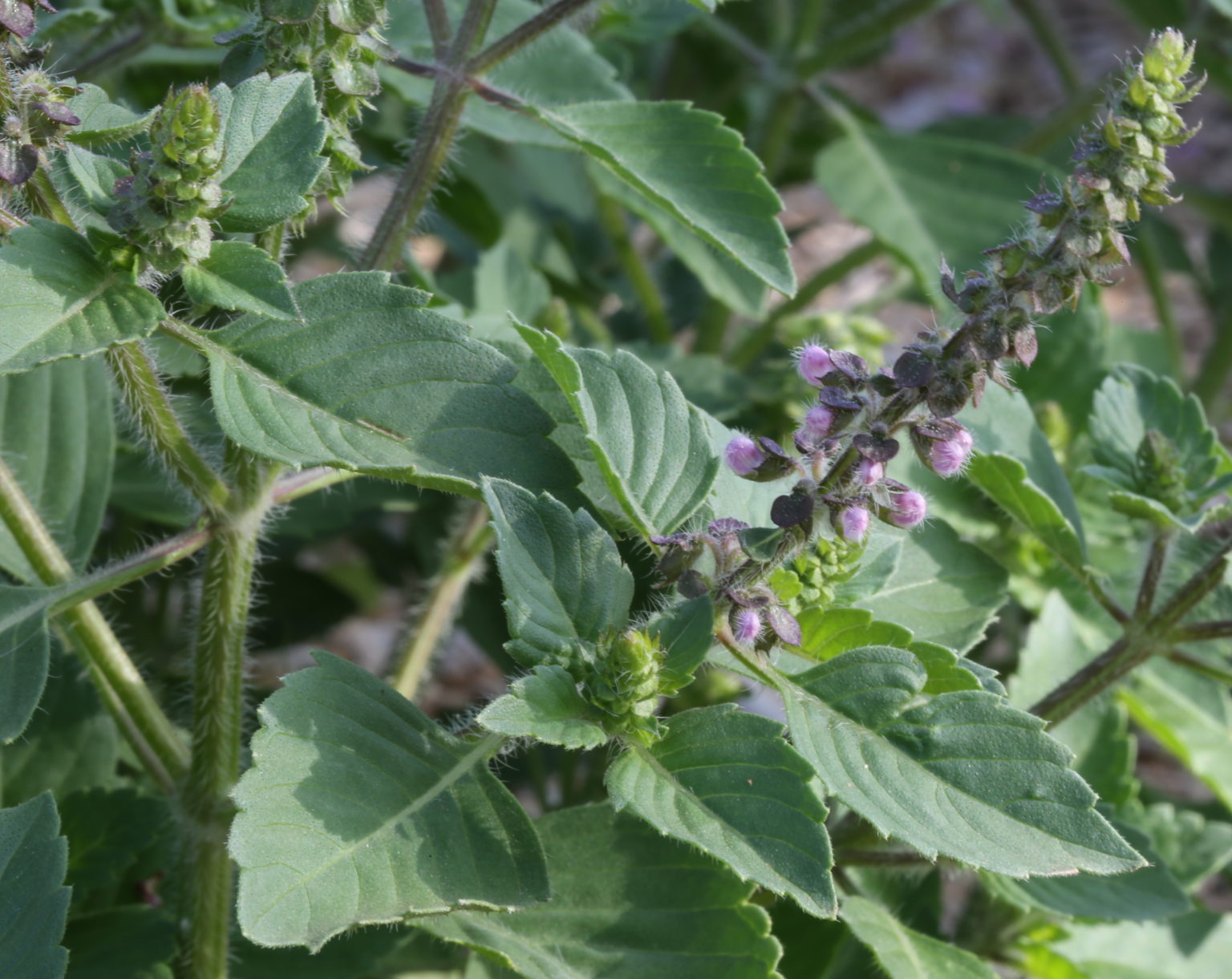
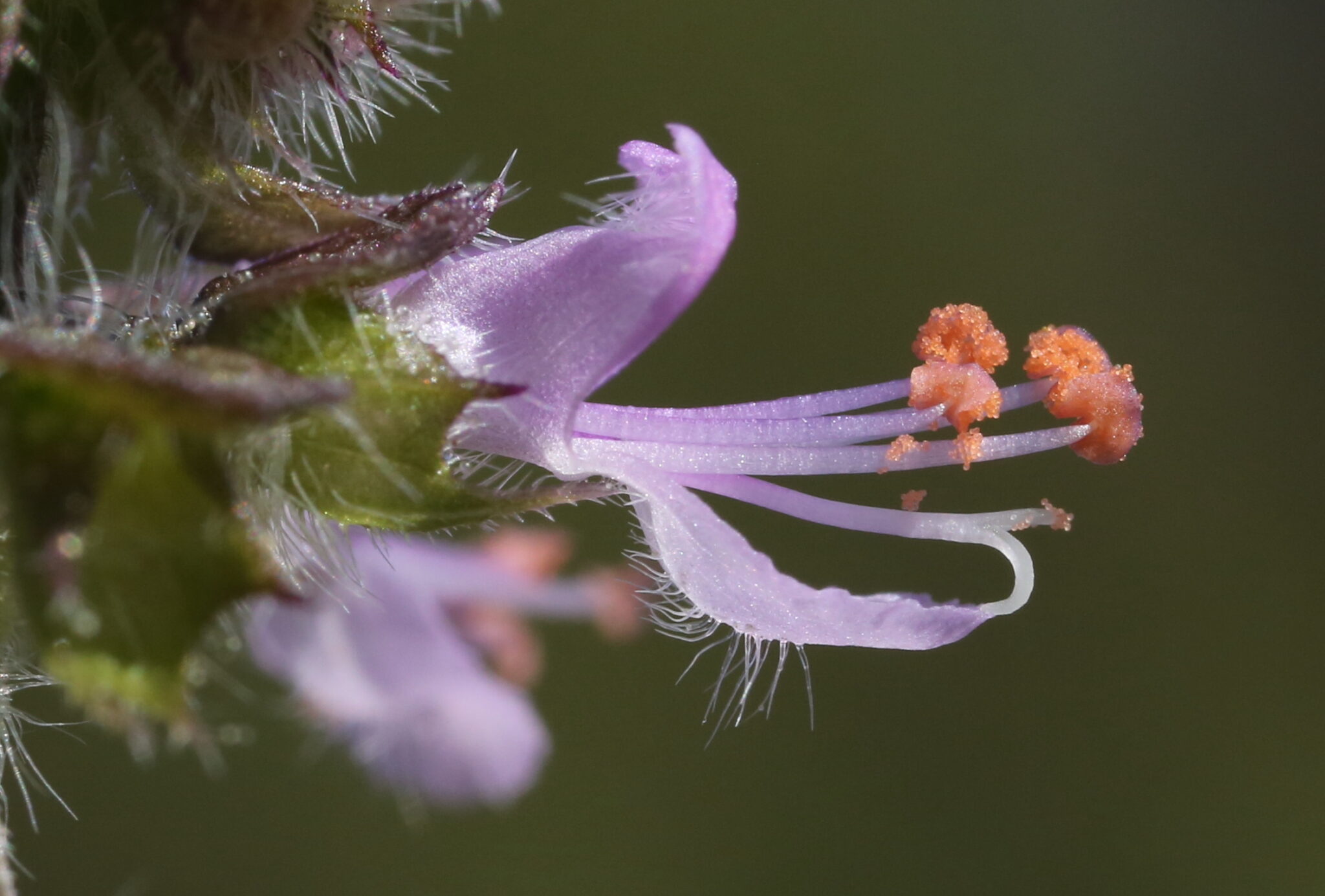
Today, you can not miss the Ethiopian Besobila for another Ocimum species as per: its very intense and unique Myrrh aroma, its mauve flowers, its orange colored anthers, its red/orange colored pollen (40% octacolpate, 30% heptacolpate and 30% hexacolpate), its calyx’s lower lip densely hairy on the inner surface, its compact and very structured growth, its huge canopy, its 0,5 g for 1000 seeds of black color (and without dormancy at all), its cold resistance to -7°C, its presence up to 2800 meters elevation, etc, etc. It is highly anti-oxidant and that is why Ocimum bisabolenum is the main plant, in the mix used by the Ethiopians of the highlands, to keep their aromatic Ghee, or clarified butter, for 15 years. Link. See the section for Ocimum bisabolenum in my last report “Floral and Reproductive Biology, and Genetic analysis, of the main Basil species”. Link.
It is to be noted, by the way, that the ecotypes of Ocimum bisabolenum, which are analyzed in the many erroneous studies from India, are growing in northern India at elevations of up to 2000 m. That is why, also, Ocimum bisabolenum is still called “Temperate Tulsi”, in the western seed market, because it is highly resistant to cold temperatures and because it grows everywhere, in temperate climate, without a plastic greenhouse – contrarily, sometimes, to Ocimum tenuiflorum and to Ocimum gratissimum which are heat-loving species.
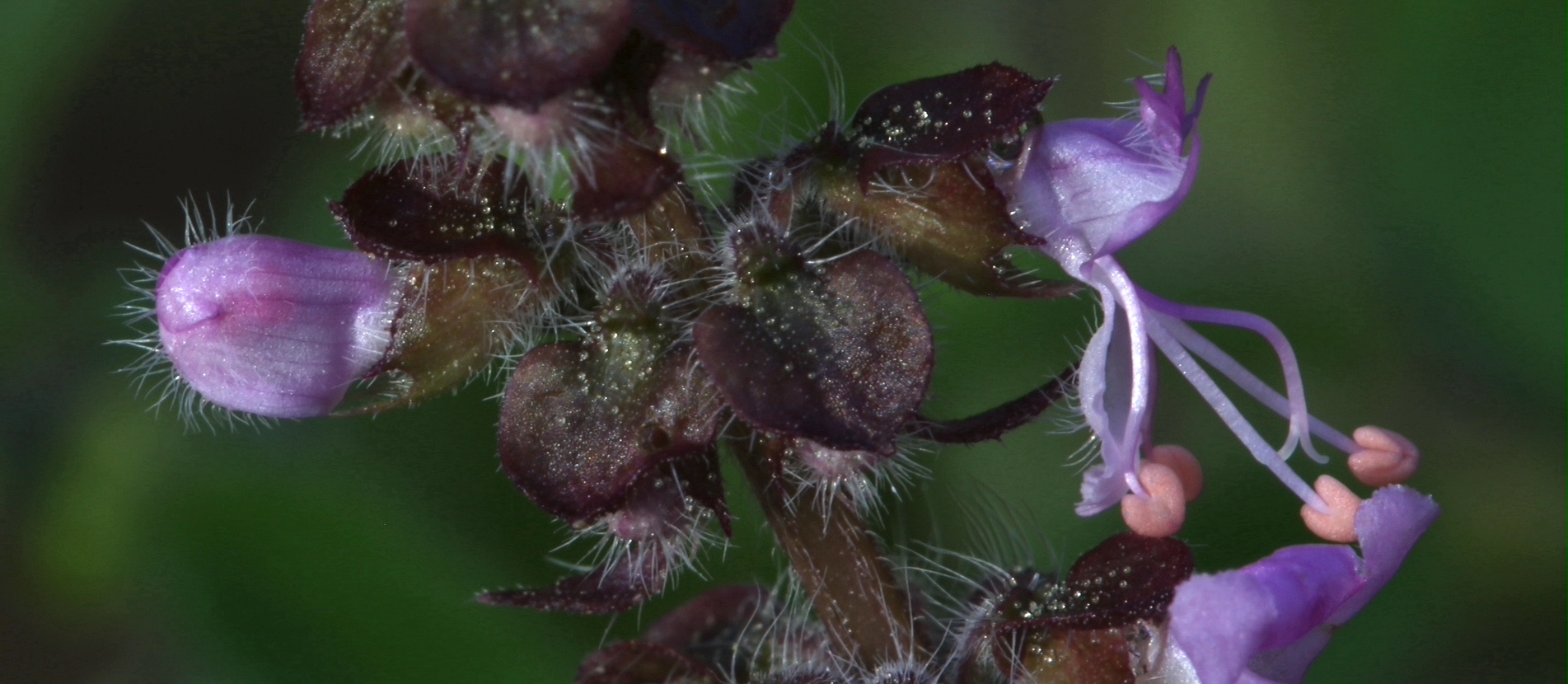
Was the Ethiopian Besobila introduced to India from the Maldives Islands, from Ethiopia… or from Association Kokopelli?
The very fascinating question arises, now, as to the introduction of different ecotypes of Ocimum bisabolenum to India – especially in the northern Himalayan regions – as well as Nepal, Pakistan and Bangladesh.
Was Ocimum bisabolenum introduced to India, in its southern part, as Ocimum kilimandscharicum was introduced, at some point in Time, from Tanzania in eastern Africa? Today, it will be hard to say, for sure, without archeological traces… although it is pretty easy to imagine that Ocimum bisabolenum could have made a big jump from Ethiopia/Somalia to the Maldives and a much smaller one to get to Tamil Nadu or Kerala. Such a small distance is nothing for a seed bound to become a Star, by Destiny!
By the way, is it a coincidence if the only ecotype, in the world, of Ocimum basilicum, utterly resistant to the Basil mildew, Peronospora belbahrii – named “Mrihani” meaning Basil in the Semitic Arab language – is originating from the island Zanzibar in front of Tanzania? I suspect that a gene flow happened, once upon a Time, in between Ocimum kilimandscharicum (utterly resistant to the Basil mildew) and Ocimum basilicum (strictly non-resistant to the Basil mildew). Indeed, Ocimum kilimandscharicum is almost 100% self-sterile, and crosses, extremely easily, with Ocimum basilicum – as I proved it, this summer, while producing more than 50 spontaneous crosses between the two species. Link
What we know, for sure, is the presence of diverse ecotypes of Ocimum bisabolenum in the paradisiac Maldives Islands – in between Ethiopia and India – a few hundred kilometers from Nagercoil. These ecotypes were introduced into the IPK Gatersleben’s collection, in Germany, and then into the GRIN/USDA collection in Iowa. By the way, in her 2003 German book – “Biodiversität der Gattung Ocimum L., insbesondere der Kultursippen” (Link) – Sabine Eckelmann analyzed 277 accessions, of Ocimum, from the IPK National Seed Bank in Gatersleben, Germany. She listed 10 ecotypes which were decidedly ecotypes of Ocimum bisabolenum with the classic Ethiopian Besobila chemotype: Bisabolene, Eucalyptol, Estragole, and Eugenol, with minor components including β-caryophyllene, α-bergamotene, and Ocimene.
Moreover, according to Sabine Eckelmann, there was another interesting correlation, for these 10 ecotypes of Ocimum bisabolenum, between the results of the AFLP method and the morphological results: she called it “the grouping of the accessions from the Maldives”. In 2003, it was already a very good find, and a very fertile track… but nobody (nobody among “experts”) gave attention.
Sabine Eckelmann asserted that these 10 ecotypes, with Bisabolene, were morphologically, chemically, and genetically, so distinct from Ocimum americanum var. pilosum – the specific denomination given to them by Alan Paton from Kew Botanical Garden – that they could be revised as a full species. Again, in 2003, it was already a good and fertile track… but, again, nobody (nobody among “experts”) paid attention – not even on credit!
Nonetheless, Sabine Eckelmann was right! And Alan Paton was wrong! And, still, wrong when he answered my mail, in 2017, insisting that the so-called “Temperate Tulsi” was Ocimum americanum var. pilosum… and nothing else. Sometimes, experts do get stuck in their auto-gratified expert loops… and stop to give full attention.
The Seed Saga of Association Kokopelli, and Annadana Seed Centers, in India and Nepal
What I may assert, for sure, is its introduction to India, and other countries around, by our French non-profit “Association Kokopelli” – of which I am the founder with Sofy, my wife and Shakta – which has distributed free seeds, of Ocimum bisabolenum, since the year 2000 with its Campaign “Semences sans Frontières” / “Seeds without Frontiers”. Every year, Association Kokopelli is distributing several hundreds of parcels, of free organic seed packets, to hundreds of poor rural communities, of so-called Third World countries, in all the continents – except Australia. Link.
Generally, for African countries, about half of the parcels contain organic seed packets of Ocimum bisabolenum – from 1 to 10 seed packets… At this time, this Basil was identified, on the seed-packets, as “Tulsi” or “Basilic Sacré” – and Ocimum sanctum/tenuiflorum. For example, when I discovered the presence of Ocimum bisabolenum in Cameroon, 4000 kms or more from Ethiopia, I asked the Kokopelli manager, of this campaign, more data about this country. It happens that Kokopelli had sent, only since 2015, 58 organic seed parcels (sent by mail or by traveling volunteers) to 58 rural communities in Cameroon – with many Open Pollinated cultivars of vegetables, grains and basils.
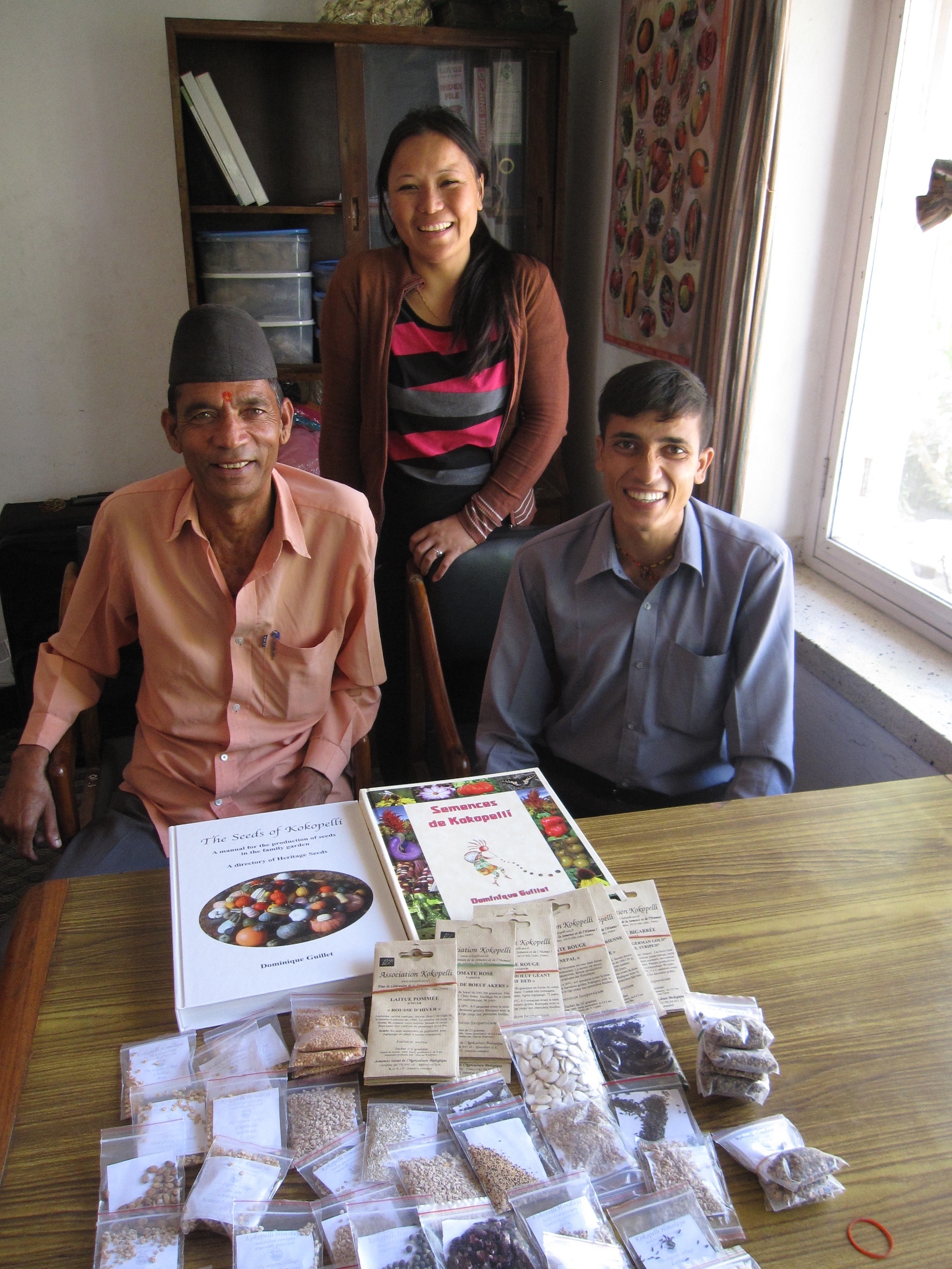
I do have a few precise data for India and Nepal, but since only 2017: we have sent free seeds to 4 projects in Nepal and 3 in India. Of course, Kokopelli does not fulfill so many requests from India as it does from Africa – as per the historical French connexions (no comment) with this continent. Kokopelli, in fact, has sent many more parcels of free organic seeds, of Open Pollinated accessions, to India and Nepal, since 2000.
That being said, Kokopelli, as a non-profit organization, has many members: up to almost 19 000 in 2020. These members pay different types of membership to help Kokopelli maintain its seed donations, and seed education, projects all over the world. Since the year 2000, some of those members have, directly, volunteered to bring their own organic seeds, harvested in their home garden, to many rural projects in India, Nepal, and other Himalayan regions.
Moreover, I am, also, the founder – with my friend and agronomist Stéphane Fayon – of the Annadana seed-bank, and seed producing unit, in Auroville, Tamil Nadu, in 2000. Link. Annadana seed-bank has been, then, functional until 2012 and, for all these years, has distributed a huge amount of free organic seeds all over India, Nepal, Sri Lanka, etc. A second branch of Annadana has, been functional from 2007 to 2021 – with Sangita Sharma in Bangalore, Karnataka. Link.
I even distributed a lot of free OP organic seeds in famous ashrams of Tamil Nadu and Karnataka!
From 2000 on, while giving workshops, on organic seed production, to farmers and agronomists, I personally distributed a lot of free organic seeds to farmers and NGOs of India, Nepal, Sri Lanka and, even, Bhutan where I had the honor to be invited by the Bhutanese Ministry of Agriculture, and Livestock – and by Dr. A. Thimmaiah, (Link ), then agriculture consultant in Bhutan – to train their agronomists in organic seed production.
As a happy Wind of Destiny, in 2010, I had the privilege to visit the National Biodiversity Center of Bhutan, in Serbithang, with its extensive collection of domesticated Buckwheats. And many years later, I created a website (unique in the world) presenting 154 taxa of Wild Buckwheats of the Eriogonum genus – Eriogoneae.com – which is the 3rd genus, in USA, as per the number of taxa – with more than 400. Link.
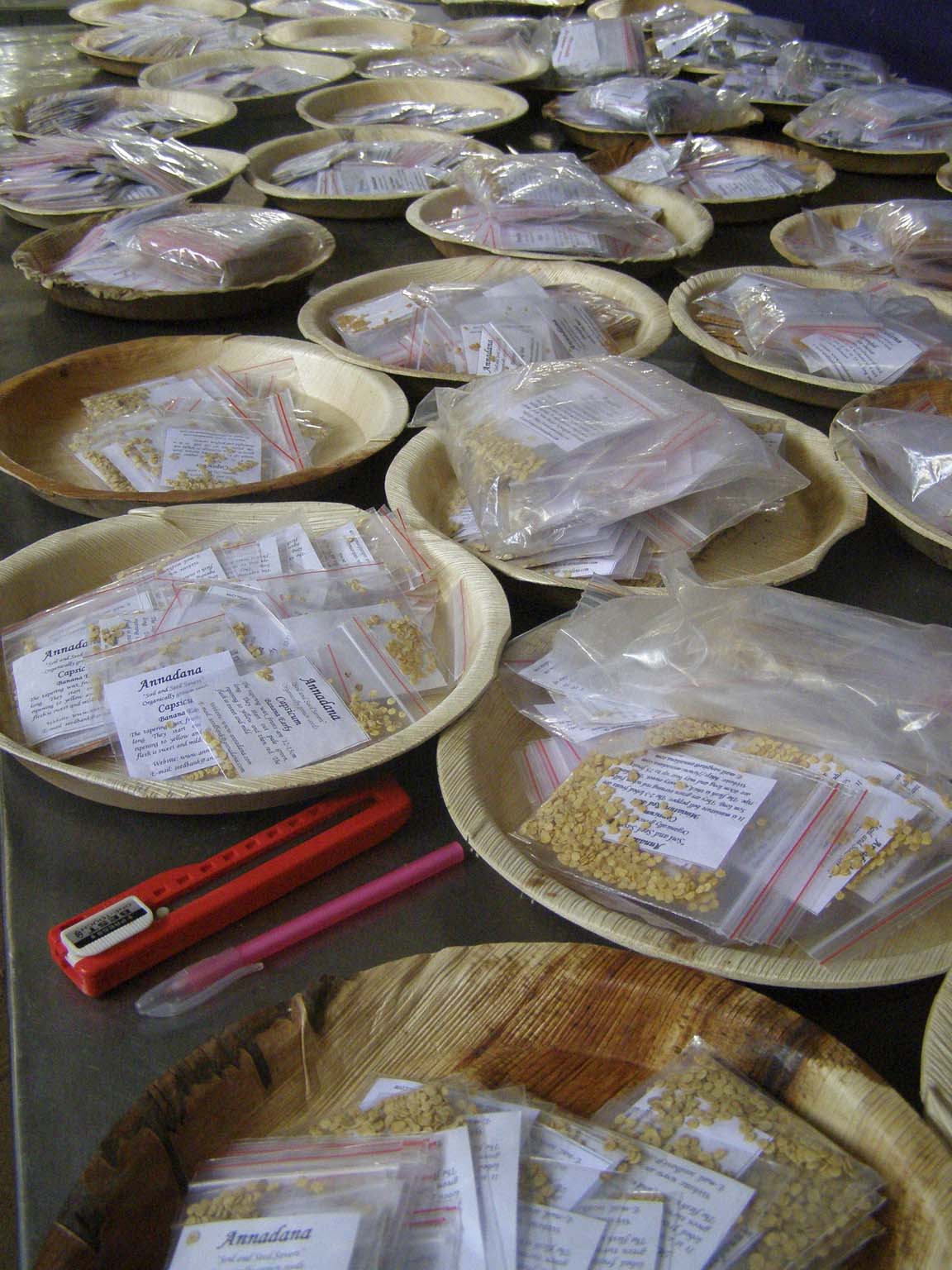
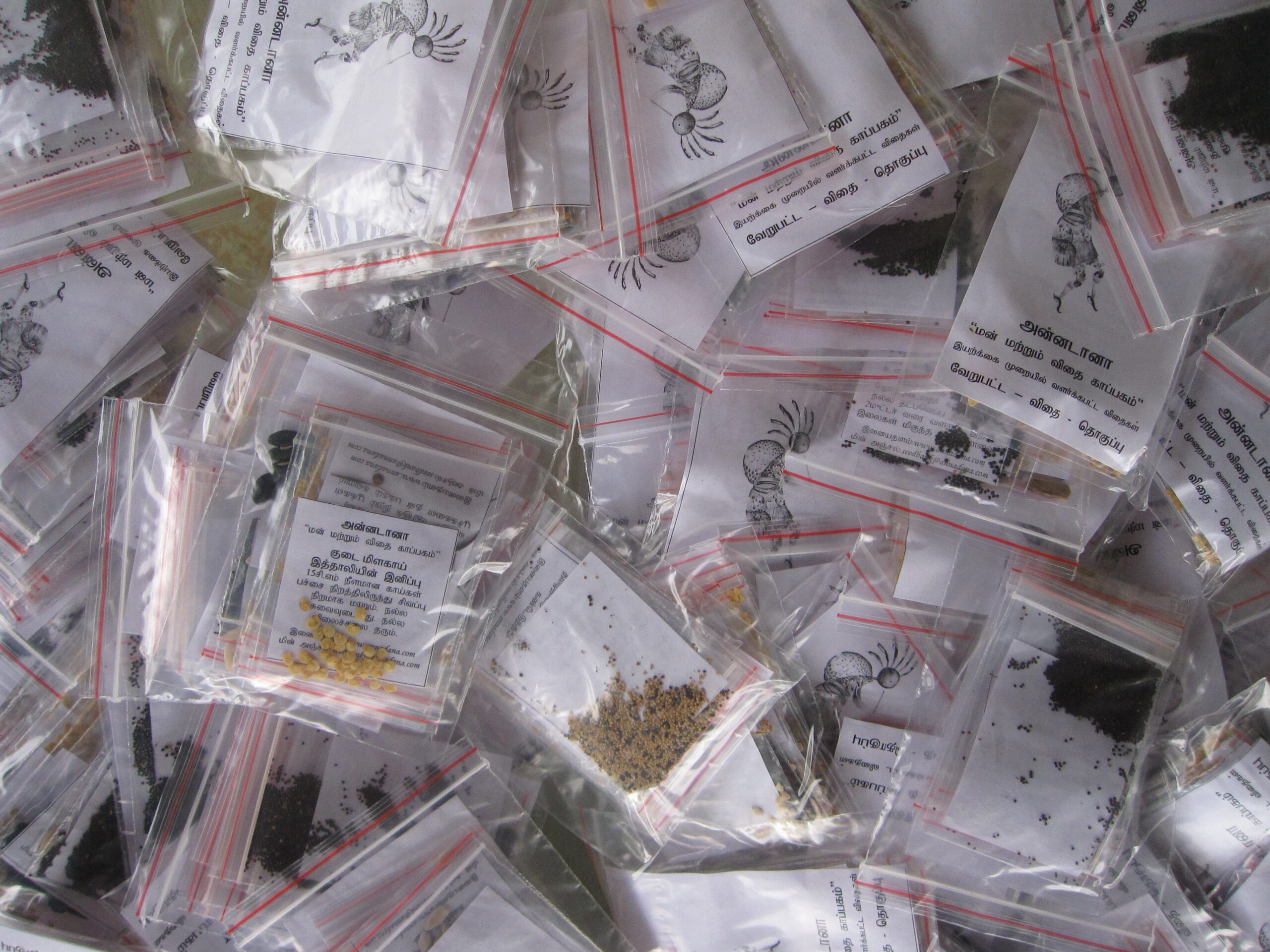
More precisely, in the years 2001/2002, Annadana, in Auroville, has distributed tens of thousands of seed packets to all the settlements of Tibetan Refugees in India. On this subject, it should be highlighted that many Indian studies, to be retracted – in relation with the misidentification of Ocimum bisabolenum – come from Uttarakhand. That state has welcome, for a long time, 4 Tibetan refugee settlements with a huge population (with traveling tendencies) of more than 10 000 Tibetan refugees. So, is it, simply, a coincidence to find this Ethiopian species in many regions of Uttarakhand – as good seeds are known to have the, welcome, inclination to travel fast? What do think the botanists of Kumaun University?
As they published a few studies about ecotypes of Ocimum americanum which are, in fact, Ocimum bisabolenum, may I invite them to consult my chapter “”How can Ocimum bisabolenum and Ocimum americanum be distinguished specifically by the morphology of their flower stems? Link.
May I advise Geeta Tewari, Lata Rana, Chitra Pande and al., moreover, to take a break, some day, and to go to Ranikhet investigate the source of their botanical problems? This investigation should have been done right away after I played the whistle-blower, during the summer 2022… because Ranikhet is just 2 hours away from the Kumaun University and Nainital. May I suggest, to them, to launch, one happy day, an official study to investigate the presence, and the antiquity, of Ocimum bisabolenum in Uttarakhand – and other Himalayan states? It seems to me that it is, already, overdue. May I suggest, moreover, to Dr. Krishna Madhav Rai, the director of the NBPGR branch in Nainital, to initiate an assessment of the territory “invaded” by Ocimum bisabolenum, in Uttarakhand, as Basil is, indeed, the most important plant in the social, cultural, spiritual and medicinal Life of Mother India. N’est-ce pas?
And what another Wind of Destiny to be in intense exchange with botanists of Naini Tal, the “Lake of the Eye” – from the Sanskrit “Naina” for “Eye” – as my grand-son is named “Nayan” from the same Sanskrit root meaning “Vision”.
At this time, it was not Annadana’s own organic seed production but organic seeds coming from Association Kokopelli as I brought, from France, in Chennai, in October 2000, 250 kgs of seeds (do not tell anybody!) in a 20 cubic meters container with all the equipment necessary to start a botanical garden and a seed production unit – as well as personal belongings to live, in Auroville, for 2 years with Sofy and three of our children.
Indeed, I was then attacked by some chauvinistic NGO, from southern India, which wanted to put me in court of justice (no comment) for invading India with exotic cultivars of vegetables! We were lucky to have, for our defense, the famous seed activist, Vandana Shiva, as well as the, then, director of NBPGR, in Delhi – who was speaking a perfect French having done a PhD in Versailles!
Today, I will abstain from any comments about what has become of Auroville in Pondicherry – as it is a Taboo subject and as I have many more fascinating projects in Life!
Suffice it to say that, besides Stéphane Fayon, and many others, my friend Bernard Declercq, who has lived there since 1968, has always been a precious ally, with his friend Deepika Kundaji, (Link) in the struggle for the protection of food-biodiversity and of seed sovereignty in India – and planetwise. Bernard Declercq, is also, a master, in India, of dry gardening, a promoter of Terra Preta, Effective Micro-organisms from Teruo Higa and of course, Ayurvedic farming (with Panchagavya).
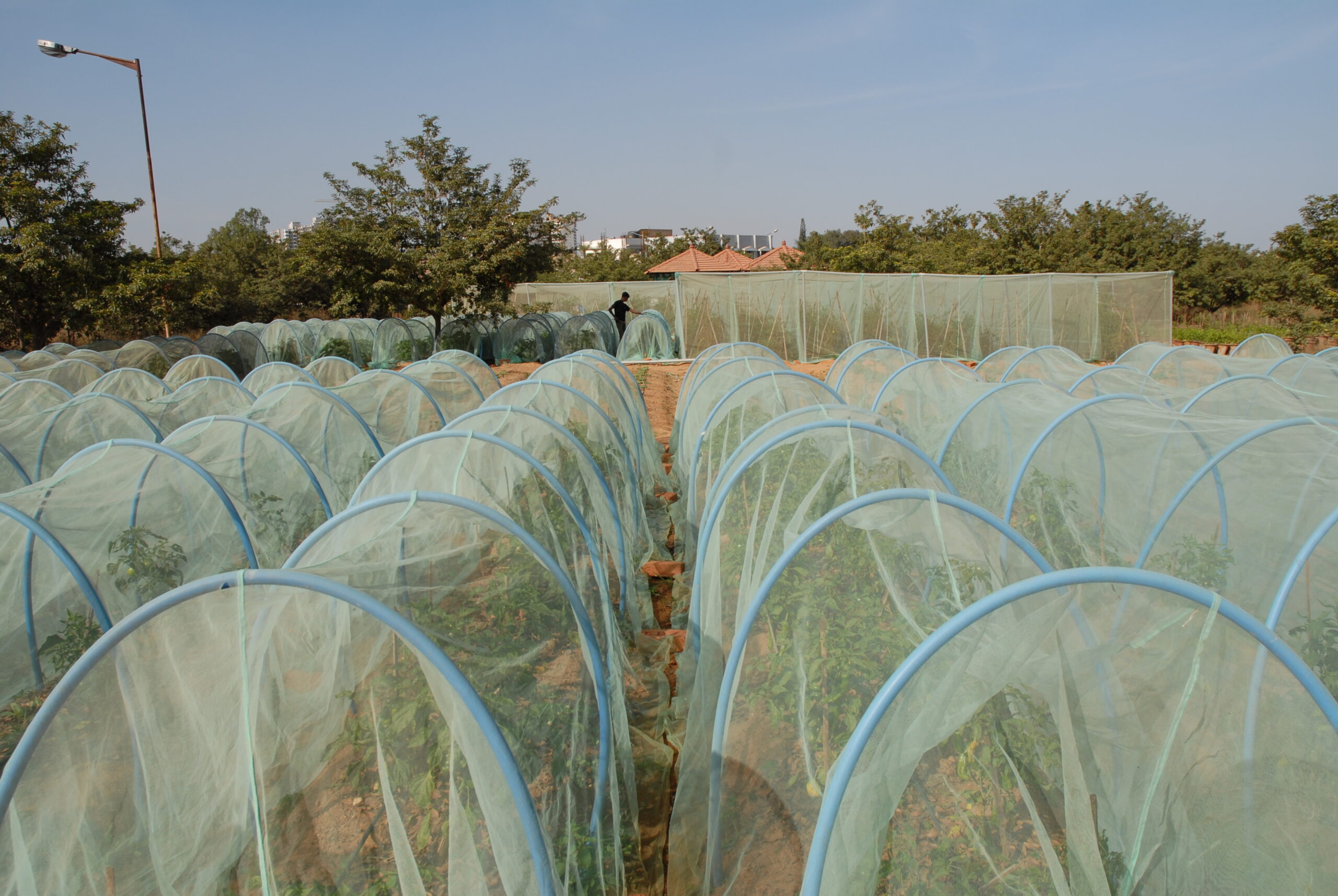
It should be noted, also, that, for some years, from 2006 on, Stéphane Fayon, with Annadana Auroville, was in a very intimate partnership with the official Bio-Center, in the Horticulture State farm at Hulimavu, in Bangalore – to develop huge organic gardens for a selection of our Kokopelli Open Pollinated vegetables adapted to that region of Karnataka. At that time, I was very happy to meet Dr Ramakrishnappa, the very kind, and very open-minded, director of the Bio-Center.
Dr Ramakrishnappa was, even, in 2007, considering installing another laboratory, in its institution, to realize chromatographies of free amino-acids present in the juices of organically grown open-pollinated heirloom cultivars of old – as my best friend Mushroom, aka Alan Michaël Kapuler (from Oregon) did it, with many hundreds of analysis, in the 80s, with the Professor Sarangamat Gurusiddaiah, in Washington University.
Mushroom, aka Alan Michaël Kapuler, was one of the best breeders, in USA, for 40 years. Link. He was breeding, for organic farming and gardening, open-pollinated cultivars of vegetables, grains and flowers – and he was, also, a master painter sur mode Picasso! Link.
Unfortunately, Dr Ramakrishnappa was promoted as Additional Director of the Department of Horticulture of Karnataka. Dr Ramakrishnappa has been advocating, and promoting, organic agriculture, for decades, and is the president of the Jaivik Krishik society – a federation of organic farmers and farmers’ groups founded by the government of Karnataka to propagate organic farming.
A few years later, in 2010, I created, with Stéphane Fayon, a branch of Kokopelli in Nepal: “Kokopelli Himalayas”! Unfortunately, this branch did not fare many years as the manager, of our Nepalese branch, was not behaving according to our ethical standards – and I deem it a loss for Nepal because the F1 hybrid seeds, sold by the Big Agro-Pharma Mafia, induce a captive market which destroys the poor farmers.
In conclusion of this historical saga of an invasive Basil in India! Ocimum bisabolenum has been in India and Nepal since, at least, the year 2000 – because Kokopelli introduced it wide and large. Nonetheless, when I discovered, on a Google group of Nepalese botanists, pictures of an ecotype of Ocimum bisabolenum with a extremely long style and not brownish bract-shields… I suspected that it could be an ecotype somewhat different from Kokopelli’s one. Link.
By the way, in my huge personal library of many thousands of books, many are from India and Nepal – including many Floras such as “Flora of Gangotri National Park” with 700 pages – but, more particularly, a few ones about the archeologically proven presence, in India, of more than 60 species (food, flowers and medicinal plants…) which are exotic, and thus “invasive”, at some point, because they were stemming from south-America 2000 years ago! Lets us Rejoice!
17 Published Studies, from India, to be Retracted – from 2022 to 2002
1. “A glance at the phytochemical and ethno pharmacological understanding of four Ocimum species”. India. 2022. To be retracted. Link.
This study analyzes 4 species, namely Ocimum basilicum, Ocimum gratissimum, Ocimum sanctum and Ocimum tenuiflorum. Of course, the 2 last ones are the very same species and the second picture, in the abstract, shows clearly that the ecotype of Ocimum sanctum is, truly, an ecotype of Ocimum bisabolenum. Hence the presence of Bisabolene, as a major component, in the right part of the illustration.
I wrote to Kamal Kant Patra who is professor of botany in the YBN University, Ranchi, Jharkhand, and it is rather amazing that a professor of botany, from India, would not recognize the sacred Tulsi.
2. “Identification of the Aroma Compounds of Ocimum americanum as a Function of Growth Stages and their In Vitro Antioxidant and Anti-inflammatory Potential”. To be retracted. India. 2022. Link.
This study is coming from a group of botanists, from the universities of Uttarakhand, in northern India: Lata Rana, Geeta Tewari, Chitra Pande, Om Prakash, Mamta Bisht, Sunita Bhatt, Bhawana Kanyal and Krishna Rana.
In this present study, two ecotypes of purported Ocimum americanum are coming from two district of Uttarakhand: Champawat (Latitude 29°41′N, Longitude 79°86′E and altitude 1850 m) and Ranikhet (Latitude 29°39′N, Longitude 79°25′E, altitude 1869 m). According to the authors: «The plant specimens were properly identified (Champawat collection: V. No. 118506; Ranikhet collection: V. No. 172761). »
Unfortunately, it is not the case as the two ecotypes analyzed are Ocimum bisabolenum. Indeed, in their chemotype, they have β-bisabolene (14.46 to 29.74%), (E)-α-bisabolene (11.42 to 22.17%) and the usual main components of this species: namely, Eugenol, Estragol and Eucalyptol – as well as the other minor components: (E)-β-ocimene, Germacrene D. One of them, at one point, had 52% of Bisabolene.
I had, a few times, very intense exchanges with these supposed botanists as, of course, they are not dealing with Ocimum americanum but with Ocimum bisabolenum.
3. “Effect of Natural Drying Methods on Flavour Profile of Camphor Rich Ocimum americanum L. from North India”. India. 2019. To be retracted. Link.
In this study, the same authors from Uttarakhand and the Kumaun university (Mamta Bisht, L. Rana, Geeta Tewari, Chitra Pande and Sunita Bhatt) mention a few times the presence of very high ratios of Bisabolene (up to 47%) in purported ecotypes of Ocimum americanum – for example, one collected from Ranikhet – which are, truly, ecotypes of Ocimum bisabolenum.
4. “Chemical composition, genetic diversity, antibacterial, antifungal and antioxidant activities of camphor-basil (Ocimum kilimandscharicum Guerke)”. To be retracted. India. 2018. Link.
In this study analyzing 13 ecotypes of Ocimum kilimandscharicum, one of them is, in fact, an ecotype of Ocimum bisabolenum: OK 13 – from Uttarakhand. According to the authors: «All populations of O. kilimandscharicum bear almost common characters, except OK13 which was morphologically distinguishable from all other populations. OK13 possessed purple flowers with obtuse bract and dark green leaves with deeply serrate margin, while all other populations possessed white flower with acute bract and pale green leaves with serrate margin… Cluster ‘B’ represented the solitary population, OK13».
OK 13 had 26% Bisabolene, and then Eugenol, Eucalyptol, Estragol as the usual major components – and β-pinene, β-Ocimene, Germacrene D… as the usual minor components.
It should be noted in this study that the antioxidant capacity of OK 13 – namely Ocimum bisabolenum – was 735 (mg GAE g−1), whereas for the 12 other ecotypes of Ocimum kilimandscharicum, it was 4.47 to 22.47 (mg GAE g−1).
5. “Phytochemical and Pharmacological Overview on Ocimum sanctum: effect of growth stages”. To be retracted. India. 2020. Link.
According to this chapter 6 of the book “Natural Products and Their Utilization Pattern” Link: « The most active constituent of this plant is eugenol (1-hydroxy-2-methoxy-4- allylbenzene) and the other bioactive compounds present in the essential oil of O. sanctum are 1,8-cineole, methyl chavicol, camphor, (E)-β-ocimene, β-bisabolene, (Z)-α-bisabolene, germacrene D and caryophyllene oxide.»
The authors (Lata Rana, Geeta Tewari and Chitra Pande of Kumaun University in Uttarakhand) once again, have published informations, stemming from four diverse erroneous studies, about the Bisabolene chemotype of purported ecotypes of Ocimum tenuiflorum which are, truly, ecotypes of Ocimum bisabolenum.
6. “Assessment of the Essential Oil Composition in Ocimum species of Uttarakhand”. India. 2017. To be retracted . Link.
In this study from Uttarakhand, the authors (Rajni Rawat, Vandana Tiwari, Ranjana Singh, and I.S. Bisht) have analyzed a purported ecotype of Ocimum viride (Ocimum gratissimum) which is, in fact, an ecotype of Ocimum bisabolenum with 30% Bisabolene, and then Eucalyptol, Estragol…
7. “Impact of Drying Methods on Essential Oil Composition of Ocimum americanum from Kumaun. Himalayas”. India. 2017. To be retracted. Link.
In this study, the same authors from Uttarakhand, and the Kumaun university, (Sunita Bhatt, Geeta Tewari, Lata Rana, Chitra Pande) have analyzed a purported ecotype of Ocimum americanum very high ratios of Bisabolene (up to 47%) and then Estragole, Eucalyptol, Eugenol… – which is, truly, an ecotype of Ocimum bisabolenum.
8. “A comparative study of morphological and anatomical structures of four Ocimum species in Uttarakhan. India”. India. 2016. To be retracted. Link.
The authors, again from Uttarakhand, (Rawat Rajni, Tiwari Vandana and Negi K S) have analyzed a purported ecotype of Ocimum viride/Ocimum gratissimum which is, in fact, an ecotype of Ocimum bisabolenum as per their own picture in page 4. The authors mention, pink/purple flowers, black seeds, 0.50 g for 1000 seeds, a huge canopy of 3843.94 cm2 (5 times more than the true Ocimum gratissimum) – all characteristic of Ocimum bisabolenum.
9. “Chemical profile of Ocimum americanum L. from north-western Himalayan region: A comparative study”. India. 2016. To be retracted. Link.
In this study, the same authors from Uttarakhand, and the Kumaun university, (Geeta Tewari, Deepshekha Punetha, Sunita Bhatt, Chitra Pande, Jitendra Diwakar) have analyzed a purported ecotype of Ocimum americanum with very high ratios of Bisabolene (up to 47%) and then Estragole, Eucalyptol, Eugenol for the usual major components – and Ocimene, Germacrene D… as the usual minor components. This is, truly, an ecotype of Ocimum bisabolenum.
10. “Ocimum sanctum (Tulsi), the Queen of Herbs : A Review”. India. 2016. To be retracted. Link.
According to this study : «The main constituents of tulsi oil are β-bisabolene (13-20%), (E)-α-bisabolene (4-7%) methyl chavicol (3-19%), 1, 8-cineole (9-33%), eugenol (4-9%), and a-terpineol (1.7-7%) (Ahmad, et al., 2002) ». Obviously, this study was referring to Ocimum bisabolenum as per the usual chemotype of this species.
11. “Comparative Volatile Oil Composition of Three Ocimum Species from Western Himalaya”. India. 2016. To be retracted. Link.
The authors (Devesh Tewari, Archana Sah, Hemant Pandey) have analyzed a purported ecotype of Ocimum sanctum, from Uttarakhand. The plant specimens were identified and authenticated from the Botanical Survey of India (BSI) Dehradun. This ecotype of Ocimum bisabolenum had 26% Bisabolene and, then, the usual main components, Estragol, Eugenol and Eucalyptol – and the usual minor components, α-Humulene, α-Bergamotene, Germacrene D…
12. “Effect of drying on the quality of essential oil of Ocimum americanum L.”. India. 2015. To be retracted. Link.
In this study, the same authors from Uttarakhand, and the Kumaun university, (Sunita Bhatt, Geeta Tewari, Akanksha Rani, Gitu Kunwar) have analyzed a purported ecotype of Ocimum americanum very high ratios of Bisabolene (up to 47%) and then Estragole, Eucalyptol, Eugenol… – which is, truly, an ecotype of Ocimum bisabolenum.
13. “Variation in essential oil composition of Ocimum americanum L. from north-western Himalayan region”. India. 2013. To be retracted. Link.
The authors (S. Singh, Geeta Tewari, Chitra Pande and C. Singh) have analyzed 10 purported ecotypes of Ocimum americanum from 10 different localities of Uttarakhand. In fact, 5 of these were ecotypes of Ocimum bisabolenum with very high ratios of Bisabolene (up to 34%) and then, the usual main components, Eugenol, Eucalyptol and Estragol – and the usual minor components, Ocimene, β-Pinene… The botanical identification of the specimen was done at the Botany Department, Kumaon University, Nainital, and submitted to the Botanical Survey of India, Dehradun (Voucher no. 33483).
14. “Compositional Variability and Antifungal Potentials of Ocimum basilicum, O. tenuiflorum, O. gratissimum and O. kilimandscharicum Essential Oils against Rhizoctonia solani and Choanephora cucurbitarum”. India. 2013. To be retracted. Link.
In this study, the authors have analyzed a purported ecotype of Ocimum kilimandsharicum which is, in fact, an ecotype of Ocimum bisabolenum with the usual chemotype Bisabolene (26%), Estragol, Eugenol and Eucalyptol.
15. “Pharmacognostical, phytochemical and pharmacological variations in various species of Ocimum genus a review”. India. 2012. To be retracted. Link.
The authors have analyzed a purported ecotype of Ocimum tenuiflorum which is, in fact, an ecotype of Ocimum bisabolenum with the usual chemotype: Bisabolene (27%), Estragol, Eugenol and Eucalyptol.
16. “Ocimum Sanctum (tulsi): Bio-pharmacological Activities”. India. 2010. To be retracted. Link.
The authors are mentioning a purported ecotype of Ocimum tenuiflorum which is, in fact, an ecotype of Ocimum bisabolenum with the usual chemotype: Bisabolene (27%), Estragol, Eugenol and Eucalyptol.
17. “Effects of Ocimum sanctum (Tulsi) on the reproductive system: An updated review”. India. 2002. To be retracted. Link.
According to this study : «The main constituents of tulsi oil are β-bisabolene (13-20%), (E)-α-bisabolene (4-7%) methyl chavicol (3-19%), 1, 8-cineole (9-33%), eugenol (4-9%), and a-terpineol (1.7-7%) (Ahmad, et al., 2002) ». Obviously, this study was referring to Ocimum bisabolenum as per the usual chemotype of this species.
20 Studies, from India, to be Corrected – from 2024 to 2008
1. “Harnessing the Antibacterial, Anti-Diabetic and Anti-Carcinogenic Properties of Ocimum sanctum Linn (Tulsi)”. India. 2024. To be corrected. Link.
According to this study, «Bioactive compounds such as camphor, eucalyptol, eugenol, alpha-bisabolene, beta-bisabolene and beta-caryophyllene are abundant in Tulsi essential oil». This mention is wrong for α-bisabolene and β-bisabolene.
2. “A Comprehensive Review of the Phytochemical Constituents and Bioactivities of Ocimum tenuiflorum”. Nepal. 2023. To be corrected. Link.
This study mentions, erroneously, that the Bisabolene – β-bisabolene, (Z)- bisabolene, α-bisabolene – is a major sesquiterpene for Ocimum tenuiflorum – which is not.
3. “Swiss ADME Predictions of Phytoconstituents Present in Ocimum sanctum Lin”. India. 2023. To be corrected. Link.
This study mentions, erroneously, that the β‐bisabolene is a major component for Ocimum tenuiflorum – which is not.
4. “A taxonomic review of the genus Ocimum L. (Ocimeae, Lamiaceae)”. India. 2023. To be corrected. Link.
This study does not include, in its taxonomic review, the existence of Ocimum bisabolenum in Nepal and India – especially in Uttarakhand.
One of the two authors, Mamita Kalita answered me right away: « Sorry, but the species Ocimum bisabolenum doesn’t exist at all. Regards » and then «In morphology, it seems like Ocimum kilimandscharicum or can be a chemotype. Bisabolene is found in the essential oil of Ocimum kilimandscharicum, but it is not the main component. Regards. »
Following these two brief answers, from one of the two authors, Mamita Kalita, I did not deem necessary to pursue this exchange… as Ocimum bisabolenum is not a “chemotype” of Ocimum kilimandscharicum and, moreover, has nothing to do, morphologically, with that other African species – apart, of course, the red brick/orange color of the pollen and anthers.
5. “A Systemic Review of Ocimum sanctum (Tulsi): Morphological Characteristics, Phytoconstituents and Therapeutic Applications”. India. 2022. To be corrected. Link.
According to this study: «Tulsi oil is mostly composed of bisabolene (13-20%), methyl chavicol (3-1%), 1,8-cineole (9-33%), eugenol (4-9%), (E)—bisabolene (4-7%) and terpineol (1.7%) ». Such a level of Bisabolene is only characteristic of Ocimum bisabolenum.
6. “Tulsi – A Review Based Upon Its Ayurvedic and Modern Therapeutic Uses”. India. 2021. To be corrected. Link.
The picture, presented in this study, shows, very clearly, Ocimum bisabolenum with short peduncles and orange-red pollen… when Ocimum tenuiflorum has long peduncles and yellow pollen – and totally different leaves. The 5 authors, from Punjab, are “Ayurvedic” therapists – but they do not know how to recognize their national sacred Tulsi.
7. “Aroma Profile of the Aerial Parts of Ocimum sanctum L. Harvested at Vegetative and Full Blooming Stages from Three Altitudes of North India”. India. 2021. To be corrected. Link.
The authors mention an erroneous study – by Negahban et al “The effect of different harvest stages on the quality and quantity of the essential oil of tulsi (Ocimum sanctum” – referencing Ocimum tenuiflorum with a chemotype of Ocimum bisabolenum.
8. “Determination of Seasonal Variation of Volatile Organic Constituents of the Leaves of Traditional Herb Ocimum sanctum Linn”. India. 2020. To be corrected. Link.
In this study, the authors are making reference to the 2005 study from Poland, “Composition of the essential oil of Ocimum sanctum L. grown in Poland during vegetation” about a huge ration of Bisabolene in a purported ecotype of Ocimum sanctum – in fact, an ecotype of Ocimum bisabolenum.
9. “Systematic Position, Phylogeny, and Taxonomic Revision of Indian Ocimum”. India. 2018. To be corrected. Link.
This study does not include, in its taxonomic review, the existence of Ocimum bisabolenum in Nepal and India – especially in Uttarakhand. So far, Velusamy Sundaresan did not answer my mail of November 11th, 2025.
10. “A review on phytochemical and pharmacological properties of Holy basil (Ocimum sanctum L.)”. India. 2018. To be corrected. Link.
The authors mention the presence of high ratios of Bisabolene in Ocimum tenuiflorum taking their references from 2 erroneous studies (from Iran and Poland) listed in my list of 116 studies to be corrected or retracted. Link.
11. “Traditional Plant Breeding in Ocimum”. India. 2018. To be corrected. Link.
The authors mention Bisabolene with the ecotypes “Blue Spice” and “Spice” identified as Ocimum basilicum – when both are, truly, ecotypes of Ocimum bisabolenum stemming from Richters Seeds Catalogue in Canada. Moreover, in page 96, they present a picture of Ocimum bisabolenum (typical leaves and mauve flowers with orange pollen) with the mention “OCL-32. Chavibetol in Ocimum”.
The main author, Rk. Lal, did not answer, so far, my mails and my request for his latest study, “DNA Fingerprinting and Genetic Relationships Similarities Among the Accessions/Species of Ocimum Using SCoT and ISSR Markers System”.
12. “A review on Indian traditional shrub Tulsi (Ocimum sanctum): The unique medicinal plant”. India. 2018. To be corrected. Link.
In page 107, Fig 3 is not a picture of Ocimum sanctum but of Ocimum bisabolenum. In fact, the Fig 2, above, presents a leaf of the ecotype “Spice”, namely Ocimum bisabolenum.
13. “Genetics, Cytogenetics, and Genetic Diversity in the Genus Ocimum”. India. 2018. To be corrected. Link.
In this study, the authors are commenting the 2016 Polish study, “Genetic characterization of Ocimum genus using flow cytometry and inter-simple sequence repeat markers.”, by Rewers and Jedrzejczyk, which should be retracted as per the many misidentifications stemming from the GRIN/USDA – of which 3 Ocimum tenuiflorum which are, in fact, Ocimum bisabolenum. See a copy of my mail to the authors: Link.
14. “Phytoconstituents, traditional, medicinal and bioactive uses of Tulsi (Ocimum sanctum Linn.): A review.” India. 2017. To be corrected. Link.
This study is making reference, again, to the same Polish study “Composition of the essential oil of Ocimum sanctum L. grown in Poland during vegetation.” concerning the presence of Bisabolene in Ocimum sanctum – in fact, Ocimum bisabolenum.
15. “Phytoconstituents, traditional medicinal uses and bioactivities of Tulsi (Ocimum sanctum Linn.): A review”. India. 2017. To be corrected. Link.
The authors mention a study, from Poland, which has misidentified Ocimum bisabolenum for Ocimum tenuiflorum.
16. “Diversity analyses in Ocimum species: Why and how?”. India. 2016. To be corrected. Link.
The authors mention a study, from north-India, with a chemotype Bisabolene for Ocimum tenuiflorum.
17. “Chemical composition of the essential oil of Ocimum tenuiflorum L. (Krishna Tulsi) from North West Karnataka, India”. India. 2014. To be corrected. Link.
The authors mention a study, from Poland, which has misidentified Ocimum bisabolenum for Ocimum tenuiflorum.
18. “Antifungal activity of essential oils of some Ocimum species collected from different locations of Uttarakhand”. India. 2013. To be corrected. Link.
In this study, a purported ecotype of Ocimum americanum – named “Spice” from Dwarahat at an elevation of 1510 meters in the Kumaon mountains of Uttarakhand – is analyzed for its anti-fungal capacity. In fact, “Spice” is the name (from Richters Seeds in Canada) given to an ecotype of Ocimum bisabolenum in the 80s.
19. “Exploring compositional diversity in the essential oils of 34 Ocimum taxa from Indian flora”. India. 2012. To be corrected. Link.
The population O7 was found to be rich in β-Bisabolene (25.6%), 1,8-cineole (17.5%), cadinene (11.9%), methyl chavicol (7.6%), and eugenol (5.9%). As per these ratios in the essential oil, the population O7 is not Ocimum basilicum but Ocimum bisabolenum.
20. “Analysis of Inter-Species Relationships of Ocimum Species Using RAPD Markers”. India. 2008. To be corrected. Link.
I suspect that this study from Tamil Nadu – where we lived for 2 years in Auroville, distributing a lot of organic seeds – was analyzing an ecotype of Ocimum bisabolenum as per the strange genetic proximity of an ecotype of Ocimum americanum with an supposed ecotype of Ocimum tenuiflorum.
Xochi. December 3rd, 2025.